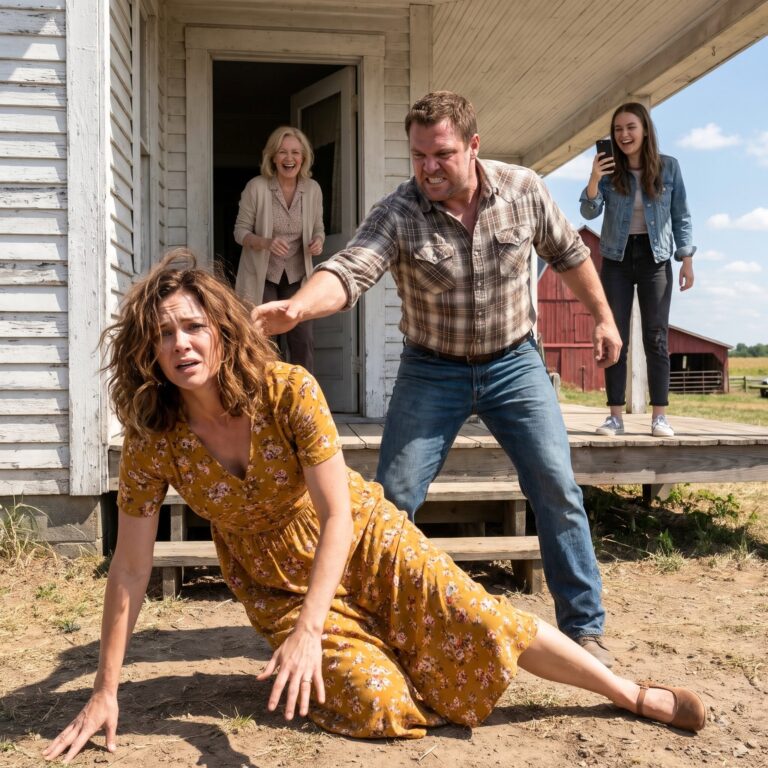
The second page contained no dementia diagnosis.
“No cognitive assessment performed,” I read aloud. “Family reports forgetfulness. Further evaluation recommended if concerns persist.”
The appointment had concerned Mom’s wrist. Lauren had turned an unfinished referral into a verdict.
“Sometimes I forget where I put things,” Mom said. “That doesn’t mean I forgot who locked the door.”
The emergency physician asked Lauren to leave while he examined Mom privately. With her permission, staff photographed the bruises, recorded her account, and arranged overnight observation because she remained unusually drowsy. Nobody promised that one conversation could rule out every illness. They did say her injuries and confinement required investigation.
Mom showed the physician a dated photograph she had taken of her arm in July. Another was from August. Both remained in her phone’s cloud account, beyond the messages Lauren had erased.
“I kept them because I thought I might start doubting myself,” she said.
Her wrist had healed. She could cook, dress, and manage her bills. What kept her dependent was Lauren’s threat that any complaint would cost her the house.
“I thought if I stayed quiet until you returned, there would still be something left for us to come home to,” she said.
Lauren stood outside the curtain, tapping her wedding ring against her phone.
“She needs structure,” she told me. “You’re seeing one bad afternoon.”
“How many afternoons have there been?”
“Do you know what it’s like caring for someone who won’t cooperate?”
I asked what cooperation meant.
“Taking her medication. Signing paperwork. Not calling everyone whenever she dislikes a decision.”
Mom’s phone lay in Lauren’s handbag.
I held out my hand until she surrendered it.
The screen showed weeks of unanswered calls from Beth and me, although Lauren had repeatedly said Mom never wanted to talk. In the deleted messages were unfinished pleas addressed to my number.
One read: Please come before she sells it.
“Sells what?” I asked.
Lauren looked toward the curtain.
“The cottage is too much for her.”
It was Mom’s house, bought outright after Dad died. Nobody else owned a share.
With Mom’s permission, I opened her email. A title company had sent a draft purchase agreement for two hundred forty-six thousand dollars. The attached power of attorney appeared to authorize Lauren to act for her.
Mom studied the signature.
“I didn’t sign that.”
The proposed closing was less than two weeks away.
The memory appointment tomorrow was supposed to support an application for authority over Mom’s affairs. Lauren had already submitted Beth’s sworn statement describing repeated dangerous behavior.
That was the twist: my sister’s name, beneath events she had never mentioned to me.
I saved the documents without changing them. Mom called her bank herself and revoked Lauren’s online access. I reported disputed spending from our care reserve, blocked the cards linked to it, and left a message with the title company questioning the purported authority to sell.
Only eleven thousand six hundred dollars remained of the thirty thousand.
There were no invoices for the home aide Lauren claimed came daily.
Instead, twelve thousand had gone to her failed decorating business. Another sixty-four hundred had paid her personal credit cards.
When her next card purchase failed, Lauren returned to the hospital furious.
“You can’t freeze my life because she’s upset.”
“Show me the care receipts.”
“I gave up months for your family.”
I waited.
“Fine. I mixed some expenses. We can fix it if you stop making this public.”
The apology depended on silence.
I asked the hospital social worker to help Mom report the confinement and injuries. Mom answered the questions herself while I sat beside her.
Lauren watched through the glass.
Then she called Beth.
My sister arrived carrying a casserole dish, as though this were a family disagreement that food could soften. She had not yet seen Mom’s face.
The social worker found us a small family room. Mom came in wearing a hospital cardigan, holding her recovered phone. I placed the bank statement beside the blue folder.
Lauren pulled a chair close to Beth.
“Tell him what you witnessed,” she said. “Tell him why we had to lock that door.”
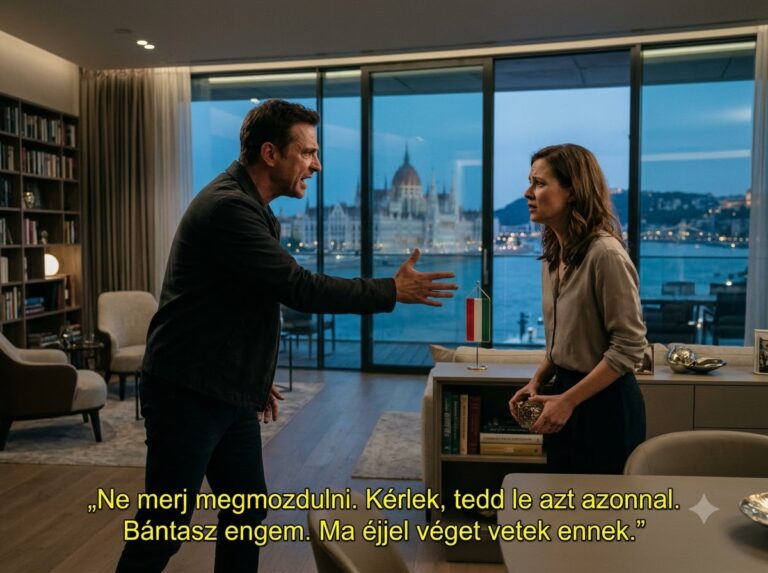
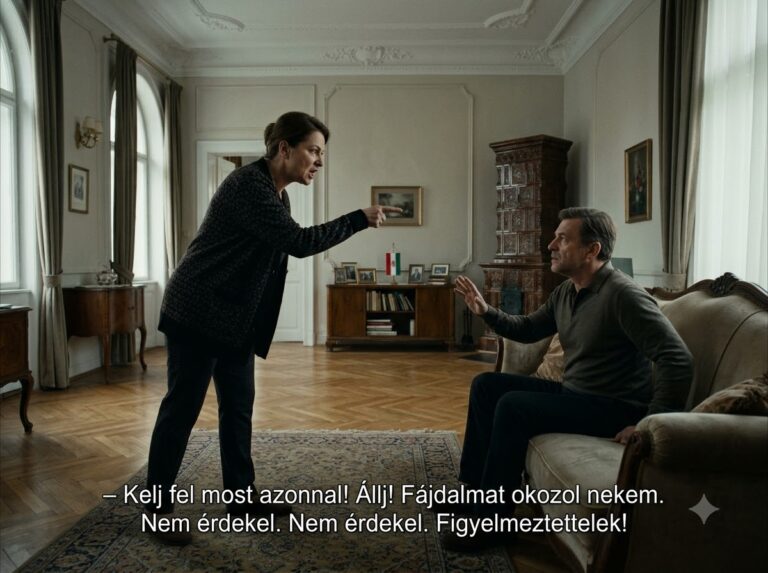
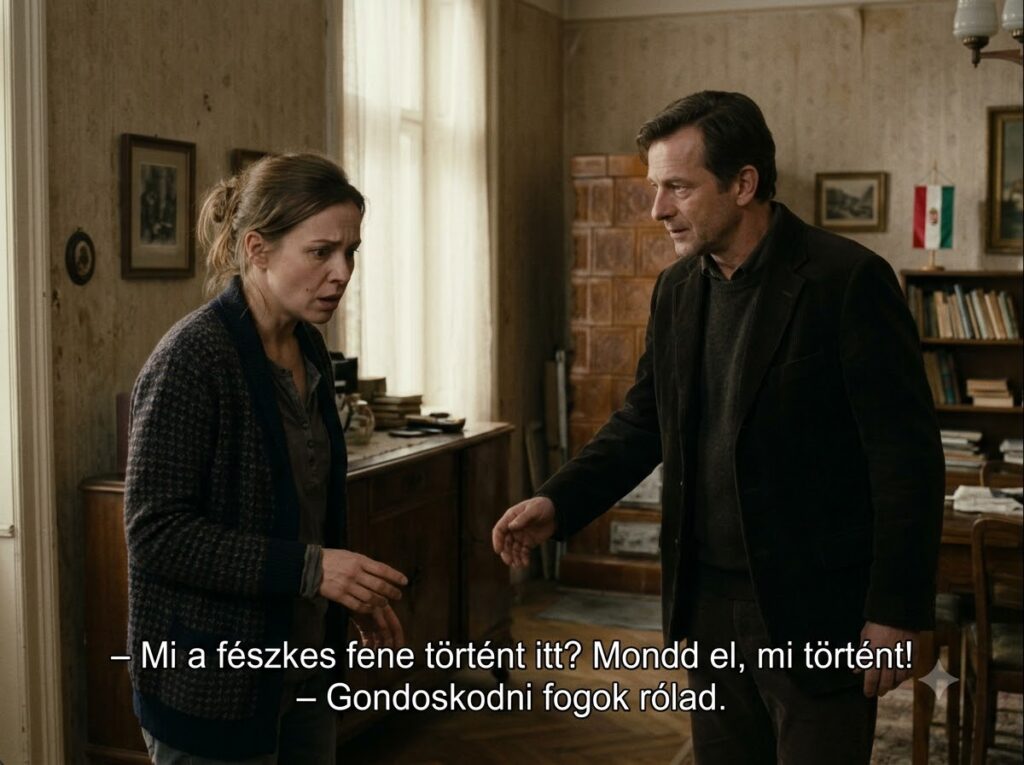
A szomszédok hittek a feleségemnek, amikor az azt súgta: „Az anyjának demenciája van – kárt tesz magában.” Amikor hazatértem a kiküldetésből, anyámat egy sötét hálószobába zárva találtam: csupa zúzódás volt, rettegésben élt, ugyanakkor teljesen tiszta tudatállapotban.
2 November 2026 · bonnie
Part 3
Beth looked at the blue folder, then at Mom’s face. “I thought you fell.”
“You thought what Lauren told you,” Mom said.
Lauren pushed the statement across the family room table. “We don’t need to frighten her with details.”
I put one finger on Beth’s signature. “You wrote that you personally observed three incidents of self-injury. When?”
Beth’s mouth opened, but nothing came out. Lauren answered for her. “She saw the photographs.”
“That isn’t what the statement says.”
Mom sat very straight. She had always straightened her back when someone tried to make her feel foolish. “I asked you to visit,” she told Beth.
“I came in August.”
“You stayed in the kitchen. I called your name.”
Beth stared at the tabletop. “Lauren said you needed to settle down.”
“You heard the key.”
My sister covered her mouth.
Lauren leaned forward. “She was screaming. The neighbors were listening. Somebody had to manage the situation.”
“It was my house,” Mom said. “I was asking to use my own telephone.”
Lauren turned toward me. “You know what people will ask?” she said. “Where was her son? How could he send money for months and never notice?”
Beth looked at me, and I saw the question land.
I had no answer that would make me look good. That was why Lauren chose it. She could offer me a version of events in which nobody had failed, provided Mom accepted being the problem.
Across the table, Mom gripped her recovered phone. I wondered how many explanations I had preferred to that unanswered ringing.
“Ask me those questions later,” I said. “Right now, answer the ones about you.”
“You wanted your mother looked after. You wanted photographs you could show your buddies. You wanted to sleep at night. Don’t pretend all that happened by itself.”